Loading...
Serving Tyler, TX and surrounding areas. (430) 247-0018
Old tile, vinyl, epoxy, or adhesive that has to go before your new floor can go down. We strip it cleanly, test the slab for moisture, and leave you with a surface your next floor can actually bond to.
Old tile, vinyl, epoxy, or adhesive that has to go before your new floor can go down. We strip it cleanly, test the slab for moisture, and leave you with a surface your next floor can actually bond to.
Concrete floor stripping in Tyler, TX is the process of removing an existing floor covering - tile, vinyl, epoxy, or hardened adhesive - from the concrete slab underneath, leaving the bare slab clean and ready for whatever goes on next, with most single-room residential jobs completed in one to two days.
Stripping does not mean tearing out the concrete slab. It means removing everything sitting on top of it so the surface is clean, flat, and solid before a new floor goes down. This matters more than most homeowners realize: putting a new floor directly over a failing or contaminated surface almost always leads to the new floor failing too - bubbling, cracking, or peeling within a year or two. Skipping this step is one of the most common reasons homeowners end up paying for the same floor twice.
In Tyler's older neighborhoods - including Azalea District homes and mid-century ranch houses - it is not unusual to find two or three layers of flooring stacked on top of each other over the original slab. Each additional layer adds labor time and cost, and older adhesives are often harder to remove than modern ones. Once the slab is bare, we test it for moisture before anything new goes down. If you are planning to install epoxy floor coatings or any other system that needs a clean, properly prepared slab, stripping is where that work starts.
Walk across your floor and tap a few tiles with your knuckle. If some sound hollow - like there is nothing underneath - the bond between the tile and the slab has broken. In Tyler homes, this often happens because the clay soil has shifted, pulling the slab slightly and breaking the adhesive's grip. Once tiles start popping, the problem spreads, and the only real fix is to strip the floor and start fresh.
If your vinyl floor is bubbling up in the middle of the room or peeling away at the edges, moisture is usually the culprit. East Texas humidity and Tyler's wet winters can push moisture up through the slab and underneath the flooring. That moisture has nowhere to go, so it lifts the floor from below. Stripping the old floor and addressing the moisture source before re-installing is the only lasting solution.
A musty or damp smell near the floor - especially in rooms that sit on a slab - can mean moisture is trapped between the flooring and the concrete. This is common in older Tyler homes where the original vapor barrier has degraded or was never installed. Stripping the floor lets the contractor inspect the slab directly, find the moisture source, and fix it before it becomes a mold problem.
If you can feel bumps, ridges, or height differences as you walk across the room, the floor has probably been repaired and re-covered multiple times. In Tyler's older neighborhoods, it is not unusual to find three or four layers of flooring stacked on top of each other over the decades. At some point, the only way to get a flat, stable surface is to strip everything back to the original slab.
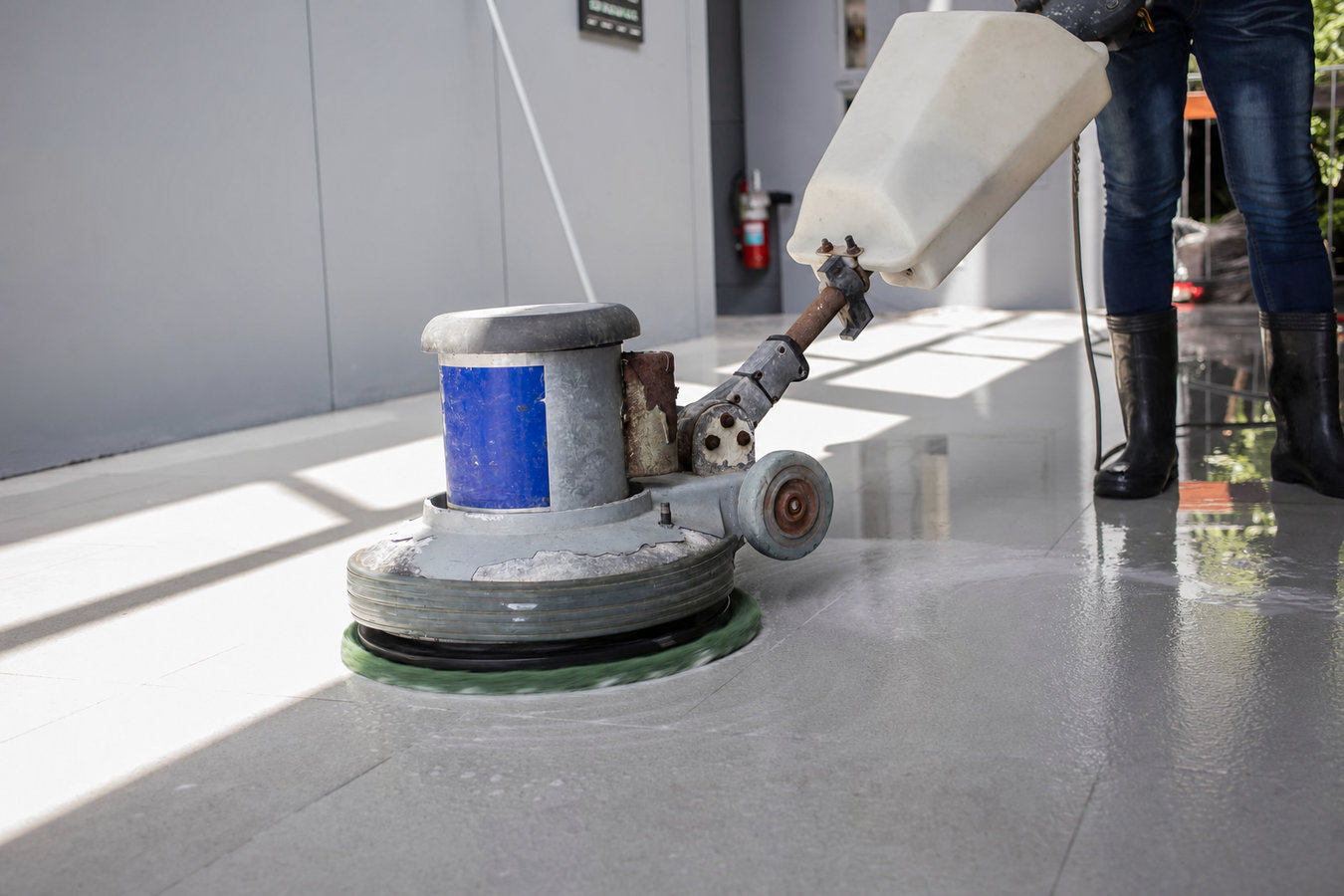
We use floor grinders, shot blasters, and ride-on scrapers depending on what is being removed and how large the area is. For smaller rooms or tight spaces, hand-held scrapers and grinders handle edges and corners. Using the right equipment matters - the wrong tool can gouge the slab or leave adhesive behind that ruins the next floor. Dust containment is part of our standard setup on every job: plastic sheeting over doorways and HEPA-filtered vacuums attached to grinders so concrete dust does not spread through the rest of your home. OSHA's silica dust standards set the baseline for how this work should be contained, and we follow that framework on residential jobs. Debris - broken tile, chunks of adhesive, old vinyl - is hauled away as part of the job. Ask upfront whether debris removal is included in your quote, because some contractors bill it separately.
Once the floor is stripped, we inspect the bare slab and test for moisture - a step that matters especially in Tyler where high humidity and clay soil mean many slabs hold more moisture than homeowners expect. If the slab needs leveling or crack repair before the new floor goes in, our concrete grinding and surface preparation service handles that next step. If you are installing epoxy floor coatings or any protective system afterward, the stripped and tested slab is the clean starting point that makes those systems work the way they are supposed to. You get a written estimate before any work begins.
Ceramic, porcelain, and vinyl tile removed along with the mastic or thinset adhesive beneath - leaving the slab clean without damaging it.
Sheet vinyl, luxury vinyl plank, and laminate flooring removed with the adhesive or staples underneath, suitable for both single and multi-layer situations.
Best for homeowners who need an old epoxy system removed before a new coating can be applied - we grind it back to bare concrete.
For Tyler's older homes where two or more flooring generations have built up over the slab - each layer stripped and hauled away completely.
Slab moisture is tested after stripping to flag any issues before the new floor goes in - critical in East Texas's humid climate.
All stripped material is collected and hauled off the site. We leave the space clean and ready for the next contractor or installation.
A significant portion of Tyler's housing stock was built between the 1950s and 1980s, and many of those homes have had two, three, or even four layers of flooring installed over the original slab. Those older adhesives - particularly the black mastic used through the 1970s - harden over decades and are often harder to remove than modern materials. If your home was built before 1985, there is also a real possibility that the original floor tile or adhesive contains asbestos. The Texas Department of State Health Services requires licensed professionals to handle confirmed asbestos materials, and we flag this risk before any stripping begins - not after the material has already been disturbed. A sample test is inexpensive and fast. Homeowners in neighborhoods like Tyler, TX proper and surrounding communities owe it to their families to take this step seriously.
Beyond the age of the housing stock, Tyler's clay soil creates a specific problem after stripping: the slab may show cracks or uneven sections caused by years of soil movement, and those issues need to be addressed before the new floor goes in. East Texas also averages over 50 inches of rain per year, and that moisture works its way into concrete slabs - especially in older homes without proper vapor barriers. Testing for moisture after stripping is standard practice here. Homeowners throughout the area, from established neighborhoods in Lindale, TX to newer subdivisions on the outskirts of Tyler, deal with these same slab conditions - and the process we follow accounts for all of them.
When you reach out, we ask a few basic questions - the size of the area, what type of flooring is currently down, and whether the home was built before 1985. This helps us give you a rough ballpark before a site visit. We respond within one business day and can usually schedule an in-person assessment within a few days.
We measure the space, look at the existing floor, and check the condition of the slab where it is visible. We note multiple layers, adhesive type, and any visible cracks or moisture staining. If the home is older, we may recommend a material test before committing to a final price - this protects both of you.
We seal off doorways, set up dust containment, and strip the floor layer by layer using grinders, scrapers, or shot blasters depending on the material. For most residential jobs in Tyler this phase takes one to three days. We collect and haul debris as we go.
Once the floor is stripped, we inspect the bare slab for cracks, low spots, and moisture. We walk the space with you and explain what we see - what the slab looks like, what it needs, and what comes next before your new floor goes in. A good slab walkthrough at this stage prevents surprises later.
We come out, look at the floor, and give you a written estimate - no guessing, no pressure, no surprises once the job starts.
(430) 247-0018If your home was built before 1985, we ask about it upfront and recommend testing before any stripping begins. Disturbing asbestos-containing materials without a plan is dangerous and illegal in Texas. We would rather have a short conversation about testing than put your family at risk or get caught in a compliance problem mid-job.
Stripping is loud and generates fine concrete dust. Our setup includes plastic sheeting over doorways and HEPA-filtered vacuums attached to grinders so the rest of your home stays as clean as possible. We clean up at the end of each work day. You will not come home to a house coated in dust.
In East Texas, moisture coming up through a slab is one of the most common reasons a new floor fails within months. We test the slab after stripping and tell you honestly what we find. If the moisture level is too high for your planned flooring, we explain your options before you spend money on a new floor that will not hold.
Debris removal adds real cost to a stripping job, and some contractors list it separately only after the work is done. We spell it out in your written estimate upfront - what is included, what is billed separately, and what the total looks like before we ever start. The American Society of Concrete Contractors at ascconline.org sets professional standards we follow on every job.
These are the practices that determine whether a stripping job leaves you with a clean slab ready for a new floor - or a rough, adhesive-patched surface that telegraphs through whatever goes on top. If you want to verify contractor standing in Texas, registrations are searchable through the Texas Department of Licensing and Regulation.
The most common next step after stripping - a properly stripped and tested slab is exactly what epoxy floor coatings need to bond correctly and last.
Learn MoreIf the bare slab needs leveling, crack repair, or further surface profiling after stripping, this is the service that gets it ready for the final floor.
Learn MoreFall and spring slots fill fast in Tyler - reach out now for a written estimate with no obligation and no pressure.