Loading...
Serving Tyler, TX and surrounding areas. (430) 247-0018
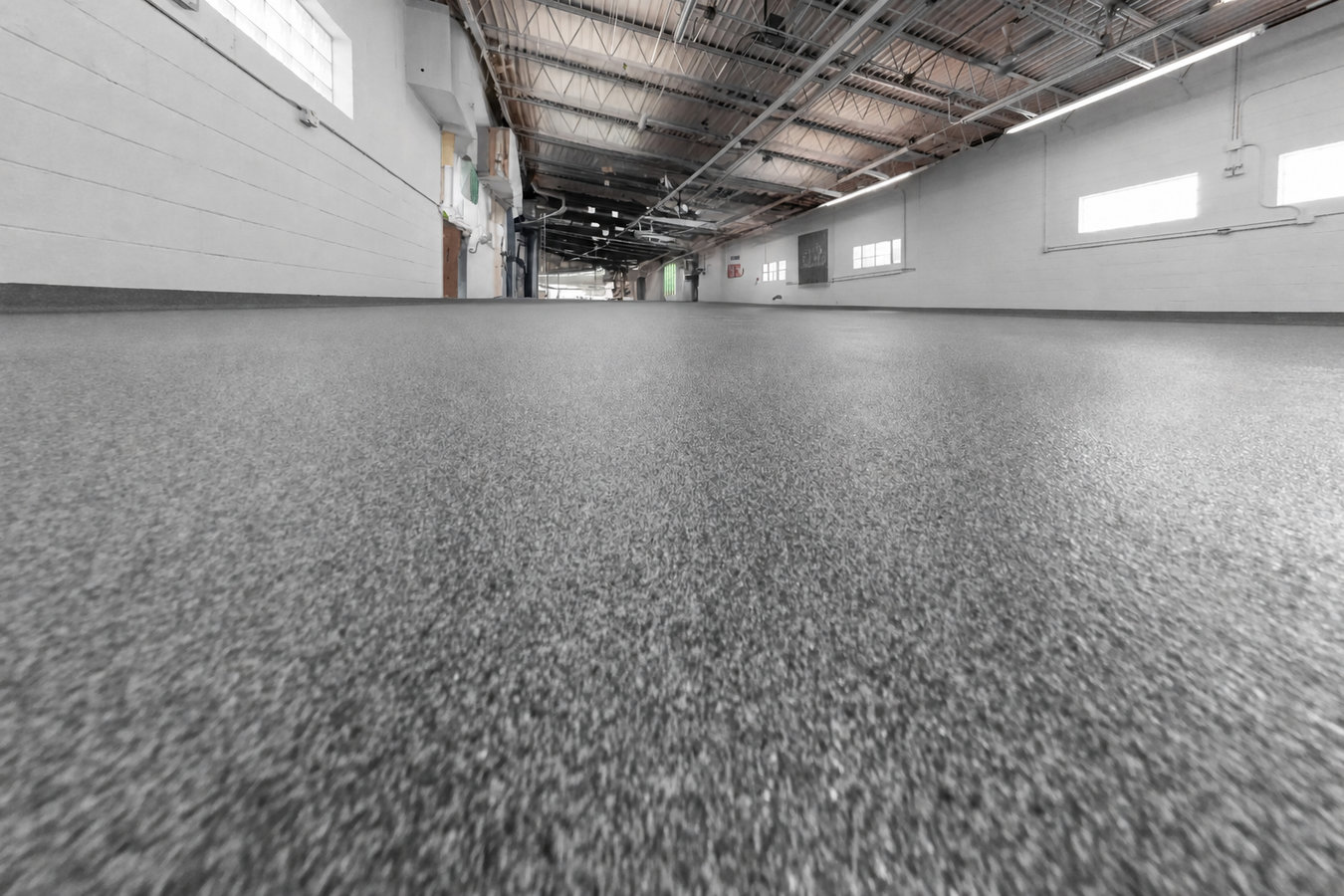
Your facility floor takes more punishment than any residential surface. We install commercial-grade epoxy coatings built for chemical resistance, heavy equipment, and the heat and humidity of East Texas.
Commercial and industrial epoxy floor coatings in Tyler, TX bond directly to concrete and cure into a seamless, chemical-resistant surface that handles heavy equipment, daily spills, and constant foot traffic - most commercial jobs run one to three days from start to finish.
Bare concrete in a warehouse, auto shop, or commercial kitchen is working against you every day. It soaks up oil and chemicals, sheds a fine dust, and gives inspectors and customers a first impression you cannot take back. A properly installed epoxy coating seals the surface, makes cleanup fast, and gives your floor the kind of grip that matters when the floor is wet.
The approach for commercial and industrial work is different from a residential garage project. The products are heavier-duty, the surface prep is more aggressive, and the stakes are higher when the space needs to be operational again on a deadline. If you are also looking at options for attached garages or finished indoor spaces, our garage floor coatings page covers those. For environments with extreme chemical exposure or thermal cycling - commercial kitchens, food processing, chemical storage - our urethane cement flooring may be a better fit and is worth a conversation.
If you are mopping up oil, chemicals, or food spills and the concrete keeps absorbing them no matter how hard you scrub, the surface is unprotected. Bare concrete is porous. An epoxy coating seals the surface so spills sit on top and wipe up easily - which also matters for health inspections and general cleanliness.
Concrete exposed to heavy traffic, chemical spills, or East Texas wet-dry soil cycles often starts to deteriorate from the surface down. Fine dust even after sweeping, small pits, or hairline cracks spreading across the slab are signs the concrete needs attention now - before the damage gets worse and more expensive to fix.
Tyler's humidity means condensation on cool concrete is a regular issue, especially in the morning or after a rainy stretch. If your team has had near-misses on a wet floor, an epoxy coating with a textured finish or anti-slip additive reduces that risk significantly. The National Floor Safety Institute sets slip resistance standards that commercial floors should meet.
If a coating applied previously is now lifting at the edges, bubbling in spots, or flaking off in chunks, the original job had a surface prep or moisture problem. The right fix is not to coat over it - it is to strip it back, address the underlying issue, and start fresh. Patching over a failing coating just delays the inevitable and compounds the cost.
A food-processing facility needs a coating that handles daily chemical washdowns. An auto shop needs something that resists oil and brake fluid. A retail showroom might prioritize a high-gloss finish. We ask about your specific use case before recommending anything - the coating system has to match how the space is actually used. For most commercial warehouses and distribution facilities, a 100% solids epoxy system with a polyurethane topcoat is the standard - it handles vehicle traffic, resists most common chemicals, and is easy to clean with a neutral cleaner. For auto shops and facilities with heavy chemical exposure, we may recommend a thicker system with a dedicated moisture vapor barrier primer first, especially on Tyler slabs where moisture pushing up from below is a real risk. If your facility has a commercial kitchen or industrial heat sources, ask us about urethane cement flooring - it handles thermal shock better than standard epoxy and is the choice for environments with steam cleaning or extreme temperature swings.
For businesses that also need their garage bays or separate storage areas coated, we can scope out those alongside the main facility. Our garage floor coatings work uses the same thorough prep process. Every commercial job starts with a walkthrough of your facility, a written assessment of the concrete condition, and a proposal that spells out exactly what system is going in and why.
Warehouses, retail spaces, and light industrial facilities that need a durable, easy-to-clean surface without specialized chemical resistance requirements.
Auto shops, manufacturing floors, and facilities that deal with oils, solvents, or daily chemical exposure that standard epoxy does not fully resist.
Loading docks, commercial kitchens, and any area where wet conditions or condensation create a slip risk for employees or customers.
Tyler's heavy clay soil expands when it absorbs water and shrinks when it dries out. That movement puts stress on commercial slabs over time and can cause cracks that seem to come and go with the seasons. Before any coating goes on, we assess whether existing cracks are stable or still actively moving - coating over a moving crack means the crack will reappear through the finish. Tyler's humidity also means condensation on cool concrete is a genuine daily hazard in facilities that deal with temperature swings, especially in the early morning. A coating with an anti-slip aggregate additive addresses that risk directly. East Texas summers regularly exceed 95 degrees, and extreme heat affects how epoxy cures. We plan work during cooler morning hours and choose products formulated for high-temperature conditions.
Many of Tyler's commercial and industrial buildings were built in the 1970s through 1990s, and their slabs reflect that age - surface contamination from decades of oil, chemicals, and use is common. Facilities along the Loop 323 corridor and the commercial areas around Kilgore and Longview often have slabs that need more aggressive prep before any coating will bond. Older concrete requires more time and cost upfront, but getting the prep right is what determines whether the coating lasts five years or five months.
Reach out by phone or through the contact form and we will set up a time to walk your facility in person. A commercial quote without an on-site visit is not a real quote - the concrete condition matters too much to guess.
We test the concrete for moisture - a non-negotiable step in East Texas. We assess any cracks for stability and document the condition of the slab before writing a proposal. You get a clear picture of what prep work is needed and how it affects the timeline.
The crew grinds or blasts the concrete, removes old contaminants, fills stable cracks, and applies primer. Industrial vacuums manage dust. For a mid-sized commercial space, plan on one full day for prep alone. This step determines everything about how long the coating lasts.
Base coat, any decorative flake if specified, then topcoat. We walk the space with you before we leave. Light foot traffic is safe after 24 hours. Heavy equipment should wait about a week. We can often work in sections so part of your facility stays operational throughout.
We walk every commercial job in person before putting numbers on paper. Tell us about your space and we will set up a site visit at a time that works around your operation.
(430) 247-0018East Texas humidity means moisture pushing up through commercial slabs is the most common reason coatings fail early in this region. We test every slab as a standard first step - not an upsell. The American Concrete Institute publishes clear standards on moisture testing, and we follow them.
The National Floor Safety Institute sets slip resistance standards for commercial and industrial floors. We can specify a textured finish or anti-slip aggregate that meets those standards - so your facility is safer for employees and customers, and you have less liability exposure.
We can often coat in sections so part of your facility stays operational while the rest cures. We discuss the work sequence with you before the job starts and give you accurate timelines - not optimistic ones. Most Tyler commercial jobs have light foot traffic ready in 24 hours.
You receive a written estimate that specifies the coating system, the prep process, the timeline, and what the floor will look like when we finish. If something unexpected comes up during prep - a crack that needs more work, a moisture reading that requires a vapor barrier primer - we discuss it with you before proceeding.
Commercial floor work in Tyler requires a commercial flooring installer who understands local conditions and follows industry standards. The National Floor Safety Institute and the American Concrete Institute both publish the standards that define what a properly installed commercial floor coating looks like. You can also verify any Texas contractor's license status through the Texas Department of Licensing and Regulation before signing anything.
Epoxy and polyaspartic systems for residential and commercial garage bays - same thorough prep process, finished in a day or two.
Learn MoreA step up from epoxy for environments with extreme chemical exposure, thermal cycling, or steam cleaning - the standard for commercial kitchens and food processing.
Learn MoreWe are booking commercial jobs in the Tyler area now - reach out today and we will schedule an on-site walkthrough before your schedule fills.