Loading...
Serving Tyler, TX and surrounding areas. (430) 247-0018
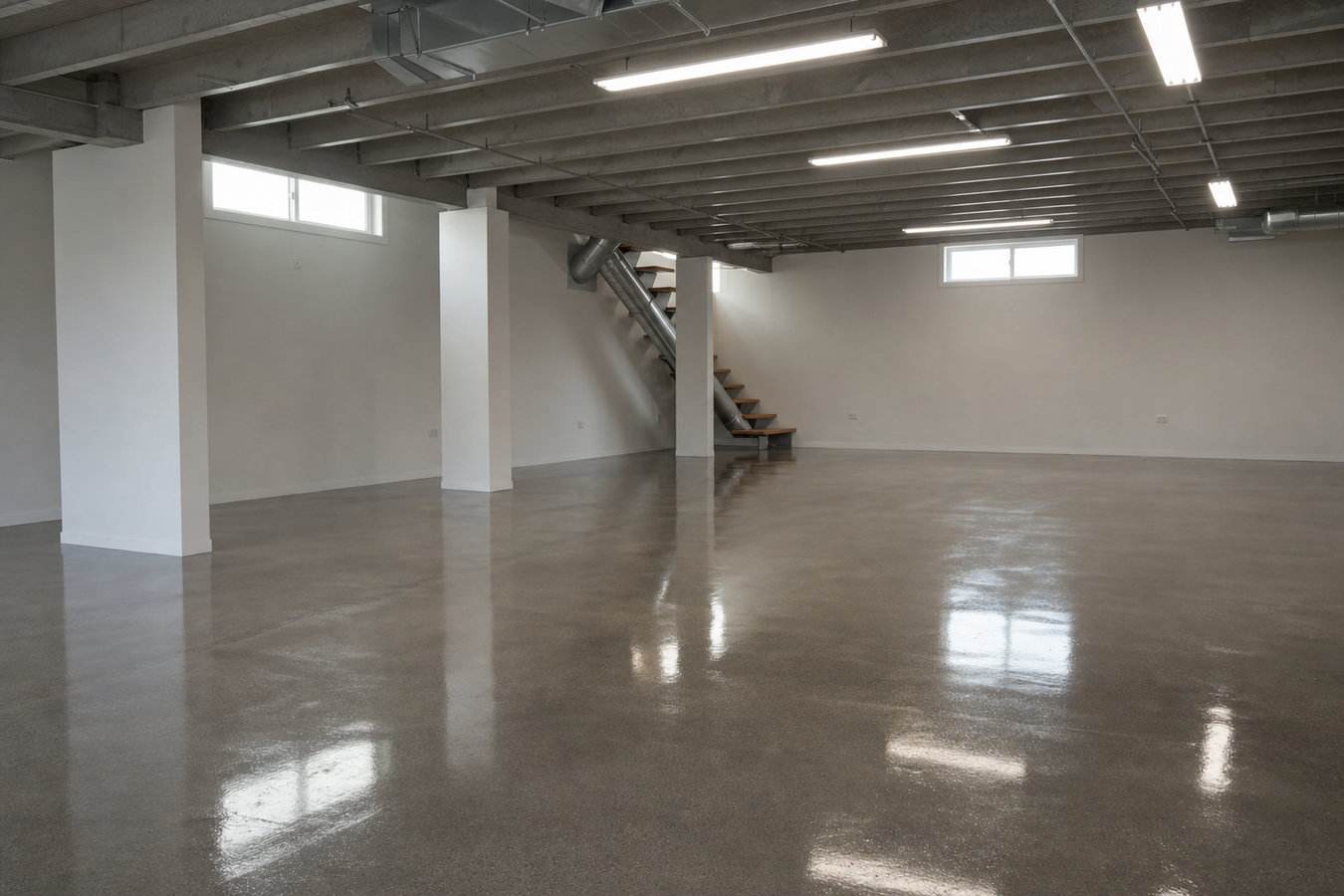
Tyler's clay soil pushes moisture up through basement slabs in ways that catch homeowners off guard. We test before we coat, use products formulated for this climate, and finish floors that hold up through wet springs and humid summers.
Basement flooring in Tyler, TX works best when it starts with concrete - polished, stained, or coated - because concrete does not swell, warp, or grow mold the way wood or carpet can when moisture levels rise below grade. Most residential projects in Tyler take two to four days depending on slab condition and the finish chosen.
The most important thing to know about basement flooring in Tyler is that the finish is only as good as the preparation underneath it. Tyler's clay-heavy soil creates moisture pressure on below-grade slabs even when there is no visible water. That moisture needs to be tested for and addressed before any coating or stain goes down - or the finish will lift and peel within months. We test every slab before quoting so you know what you are actually dealing with. For homeowners looking at their full concrete floor system, our Concrete Grinding and Surface Preparation service is the foundation that makes any basement finish last.
Concrete can be transformed with color and texture - acid stains, water-based stains, decorative coatings - so the raw gray slab most homeowners picture is not what you end up with. Many Tyler homeowners are converting below-grade spaces into home gyms, workshops, or extra living areas, and the right finished floor makes that space usable and genuinely good-looking.
That chalky white substance is called efflorescence, and it means water is moving through your concrete and leaving mineral deposits behind. In Tyler's clay-soil environment, this is a common early warning sign that moisture pressure is building under or around your slab. It does not mean flooding is coming - but it does mean the floor needs attention before any new finish goes on top.
If a previous coating or paint is lifting away from the slab, it almost always means the surface was not prepared properly before it was applied - or that moisture got underneath it. This is very common in Tyler homes where a previous owner applied box-store floor paint without doing the prep work. A fresh coat on top will not fix it. The old material has to come off and the slab has to be properly treated.
A musty smell in a below-grade room is one of the clearest signs that moisture is present, even when you cannot see standing water. Tyler's high humidity and frequent spring rains make this a common complaint, particularly in older homes. Addressing the floor with the right sealer or coating is often part of the solution, though the walls may need attention too.
If you are turning a storage basement into a home gym, workshop, or living area, the bare concrete floor is not something you want to leave as-is. Stains from old water heaters, oil spots, and years of use can all be addressed during a floor refinishing project. This is the right moment to get it done - before furniture, equipment, and wall finishes go in.
We handle the full range of concrete floor finishes for below-grade spaces - epoxy coatings, polyurea coatings, acid stains, water-based stains, and penetrating sealers. Which one is right for your space depends on how you use it, how much moisture your slab has, and what you want the finished floor to look like. A home gym has different requirements than a finished living space, and an outdoor-style workshop floor is different again. We walk you through the options based on what your specific slab and space actually need before you commit to anything. For a look at the staining options in more detail, our Concrete Sealing service covers how we choose and apply the right protective topcoat for different conditions.
Surface preparation is where most of the work happens and where most of the value is created. Grinding the slab, removing old coatings and adhesive, filling cracks, and testing for moisture are all part of what we do before the finish coat goes on. This is the step that separates a floor that lasts from one that looks good for six months and then starts peeling. Every estimate we provide itemizes the prep work so you can see exactly what is included.
Best for home gyms, workshops, and utility spaces where you need a hard, impact-resistant surface that wipes clean easily and handles heavy use.
Ideal for homeowners converting below-grade space to finished living areas - stain penetrates the slab permanently and gives the floor real color without adding height.
Suited for slabs that need moisture protection without a decorative finish - the sealer soaks into the concrete and blocks water vapor without changing the appearance significantly.
For Tyler slabs with settling cracks from clay-soil movement - filled, blended, and addressed before any finish coat goes on so the repair does not telegraph through the surface.
Tyler sits on Blackland Prairie-adjacent clay soils that expand when wet and shrink during dry spells. For basement and below-grade slabs, this constant movement puts pressure on the concrete from below - pushing moisture upward even when there is no obvious source of water. Tyler also averages around 47 inches of rain per year, with high relative humidity through much of the summer. That moisture does not just come in through walls - it can condense on a cool concrete slab from the air above. A contractor who understands East Texas conditions will factor all of this into the product they recommend, choosing a coating or sealer that creates a true vapor barrier or one that can breathe without trapping moisture underneath.
Many Tyler homes with below-grade spaces were built in the mid-20th century, when waterproofing standards were minimal. If your home is more than 40 years old and has a basement, there is a real chance the slab has never been properly sealed. We work regularly in established Tyler neighborhoods and serve homeowners across the region, including Whitehouse and Bullard, where the same clay-soil conditions apply. The EPA moisture control guidance is a useful reference for understanding why moisture testing matters before any floor coating goes down. The American Society of Concrete Contractors sets surface preparation standards that inform our prep process on every basement project.
We will ask about the size of the space, its current use, what you see on the floor now, and what you want when the work is done. We respond within one business day and set up an in-home visit before we talk numbers.
We visit your home, test the slab for moisture, check for cracks and old coatings, and walk through your finish options. You receive a written estimate that separates labor, materials, and prep work as individual line items - no single-number quotes.
We grind or shot-blast the slab, remove all old coatings and adhesive, fill cracks, and confirm the surface is properly profiled to bond with the new finish. In Tyler homes with previous coatings applied without prep, this stage can take longer - but it is what makes the floor last.
The chosen coating, stain, or sealer goes on in the right conditions - in Tyler's summer heat, we schedule application for cooler parts of the day. We give you a specific timeline for foot traffic and furniture. Before we leave, we walk through the finished floor with you.
No obligation, no pressure. We test your slab, walk through your options, and give you a written estimate - usually within one business day of your call.
(430) 247-0018We test every basement slab for moisture before quoting, using proper testing rather than a visual inspection. Tyler's clay soil pushes moisture through below-grade concrete in ways that are invisible until a coating starts peeling. Testing first protects your investment.
We specify coatings and sealers that are formulated for high heat and high humidity. A product installed correctly but not rated for Tyler's summer conditions will fail earlier than it should. We choose products based on what your specific slab and space actually need.
Our estimates include grinding, crack repair, old coating removal, and surface profiling as part of the job - not as add-ons discovered after work starts. You will know exactly what the prep involves before anyone picks up a grinder.
We have worked on below-grade spaces across the Tyler area and understand what local clay-soil and humidity conditions do to concrete over time. That knowledge informs every product choice and scheduling decision we make on your project.
The common thread is doing the prep work correctly and using the right product for the actual conditions. A basement floor installed that way holds up for years. One that skips those steps fails faster than the homeowner expects.
Diamond grinding and shot-blasting to remove old coatings, open the slab surface, and build the foundation every long-lasting floor finish needs.
Learn MorePenetrating and topical sealers applied to protect concrete from moisture, stains, and East Texas climate conditions - with the right product matched to each application.
Learn MoreSpring and fall book fast in East Texas - the best seasons for concrete coating work. Reach out now to lock in your project date.